
Interview: Cola Ren on capturing the air and breath of a moment through music
How fractured bones and ‘cut out’ CDs have shaped the Guangzhou producer’s sound

Hello and welcome to Concrete Avalanche, a newsletter about music from China. Thanks very much for reading.
If you’d like to listen to lots of great music from China for free, all in one place, check out the Concrete Avalanche playlists here. Please support the artists if you can.
I also have a tip jar running on Ko-fi. You can contribute here if you’d like:
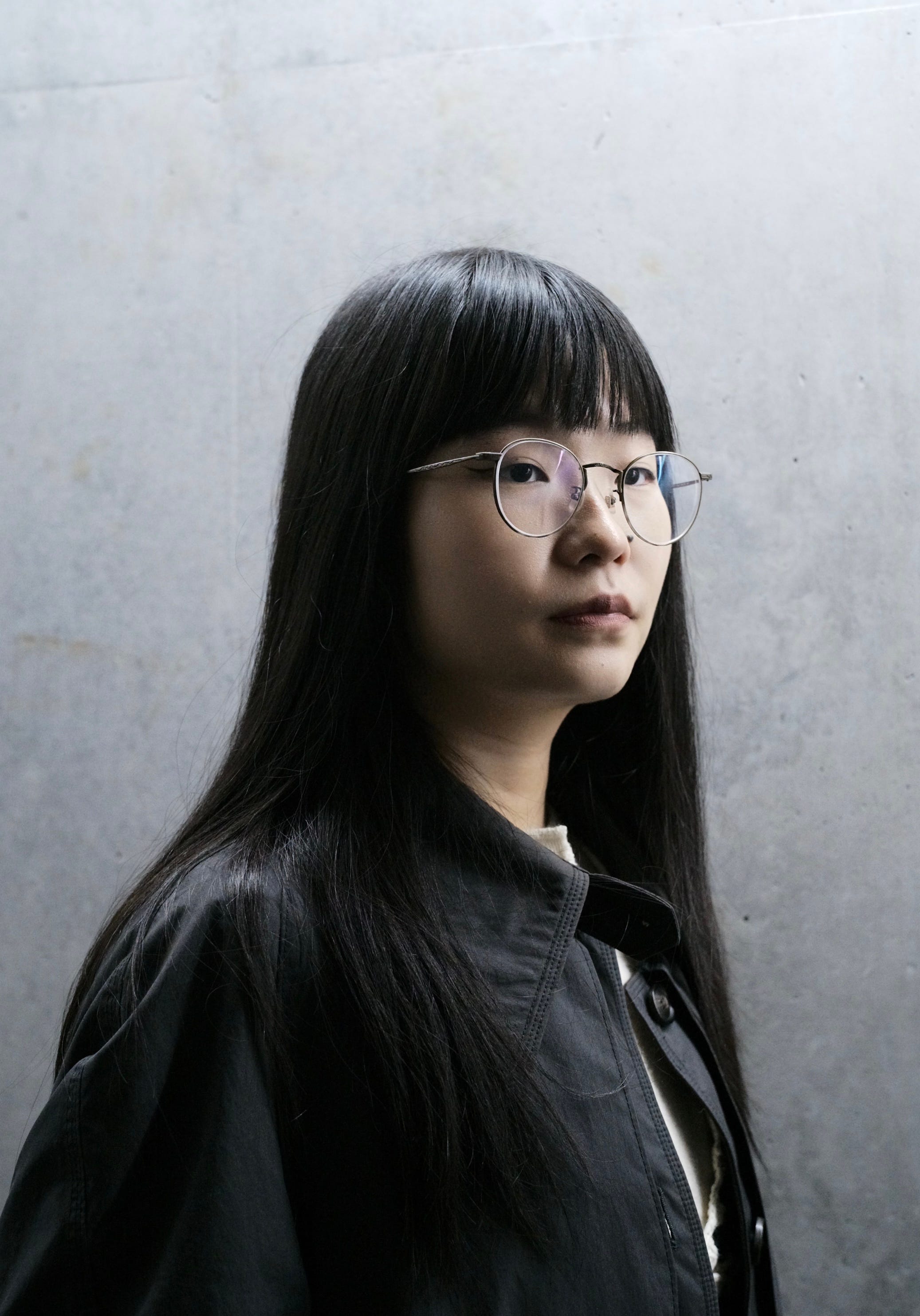
Apologies for bothering your inbox more than usual, but in this issue: a special edition, an interview with Cola Ren. The internationally-acclaimed Guangzhou producer talks about her beautiful new record Mekong Ballad, how fracturing her foot led to her making music, and the importance of her time at renowned London experimental venue Cafe OTO.
“When I make music, it feels like a conversation with myself, pulling up things that have been sitting quietly inside”
In the latest issue of Concrete Avalanche, I raved about the new EP from Cola Ren, Mekong Ballad:
Released on Tristan Arp and Simisea’s ambient-leaning New York-based label Human Pitch, the record is five tracks of blissfully soothing music all themed around two of the wu xing (five elements). As the official introduction puts it, “Influenced by the breath of rivers and the weight of tropical air, each piece drifts like reflections on moving water—dissolving, refracting, and returning.”
Ren’s previous two releases, 2023’s Hailu and last year’s Forest Drone, were also in the downtempo and ambient realm, yet Mekong Ballad feels like new ground. The producer pulls in guest features from Thai trumpeter rrrrrm and Beijing-based saxophonist tga, who performed live during her set at Chengdu’s Chunyou Festival earlier this year. She also adds her own vocals for the first time, singing lyrics penned by rapper J-Fever (小老虎) on the record’s title track. Such elements add what the label terms an “organic, human pulse” to Ren’s beautifully dream-like soundscapes.
Not that you need to take my words for it when it comes to Ren’s talent. Her previous EPs have received glowing appraisals from music writers such as Philip Sherburne and Shawn Reynaldo of the essential Futurism Restated and First Floor respectively.
Sherburne wrote of her Hailu Remixes EP that it was “love at first listen”, but not just because of the stellar cast of producers assembled to reinterpret her work: “it’s clear that while the remixers have added their own respective brands of fairy dust, the magic was right there in the songs from the beginning.”
More recently, Reynaldo followed up his effusive praise for Ren’s 2024 EP Forest Drone by describing her latest record as “both wonderfully colorful and refreshingly organic”.
But enough of other people’s words, here’s Cola in her own…
Can you talk a little about how you first became interested in music? Was the piano your first instrument?
I’ve been drawn to music since I was very young—from anime music to whatever I heard in my parents’ car.
Piano was my first instrument, but the training was very exam-focused, and the pressure made it feel dry and not very joyful, so I eventually stopped. I only reconnected with music later on, when I began exploring sounds for myself rather than playing for a test.
When did you start collecting records? And how did you go from being a record collector to becoming a DJ?
I started buying CDs in middle school—mostly anime and video game soundtracks. I was also obsessed with “dakou” CDs back then (I’m from Guangzhou… if you know, you know).
More on “dakou”:

In high school I shifted toward collecting albums from indie bands I loved and some jazz records. I only got into vinyl in university, after a friend gave me a turntable—and things escalated quickly from there.
Becoming a DJ felt like a natural progression: once you own that many records, you just want to share them with people in a live setting.
Did the move into production also feel quite natural?
I’d always wanted to try making my own music, but I actually started in 2022 during the Shanghai lockdown. I fractured my left foot around that time and had to return to Guangzhou to recover, which forced me into a slower, quieter state.
Ironically, that “being stuck” period gave me the space to finally open my laptop and turn what I was feeling into sound. Once I started, I realized how naturally it suited me.
You’re also a photographer. Is there any overlap in how you approach photography and how you approach music?
To me, both photography and music are about capturing how I feel in a specific moment. Photography freezes the image, while music preserves the air, the emotion, the breath around it.
They both come from the same place—just trying to show how I see the world at that time.
Each of your records so far has referenced spirituality and consciousness at some point. What role do they play in your music-making?
For me, spirituality isn’t something mystical—it’s more like a way of sorting through my emotions. When I make music, it feels like a conversation with myself, pulling up things that have been sitting quietly inside. So spirituality is simply an inner space where I can hear myself more clearly.
Can you talk a little about the creative process behind your music?
I don’t have a rigid process—sometimes I start with a field recording, other times with a chord or a simple rhythm. Usually I just look for a sound that makes me want to keep listening. From there, I build it layer by layer, almost like constructing a small room.
Once the atmosphere feels right, I begin shaping the structure.
How and when did the concept for Mekong Ballad first take shape?
The concept didn’t appear all at once—it really began with my trips to Cambodia and Thailand in early 2020 and again in 2023. Those journeys left me with a deep impression of the rivers, the humidity, and the air in Southeast Asia.
When J-Fever wrote the lyrics [for lead single ‘Mekong Ballad’], he included imagery of the Mekong River, almost as if he translated the pictures in my mind into words. So in this case, the lyrics came first, and the music followed—I shaped the track around the world he created.
That’s also how the water theme gradually became the core of the record.
On that title track, we hear you sing for the first time. What made you want to add your own vocals?
The main reason was simply that J-Fever had already written the lyrics. I loved what he wrote, and as soon as I read it, I felt it should be sung by me.
I’ve always wanted to include vocals in my music—it just never felt like the right moment before. This track finally gave me a natural opening, so I just went with it.
How did you end up working with J-Fever in the first place? Any chance of him rapping on a Cola Ren track some time?
I met J-Fever through our mutual friend Endy. One day I casually played him a demo of a completely different track, and it sparked something—he wrote the lyrics for this song almost immediately. But I didn’t end up using the lyrics for that original track; instead, I created a brand new piece to carry them.
As for him rapping on one of my tracks someday—I think it’s definitely possible. It really depends on when inspiration strikes again.
You’ve also got guest instrumentation from tga and rrrrrm on the new record, how did your collaborations with them come about?
We’ve all admired each other’s music for a while, so the collaborations came very naturally.
Their improvisations added a sense of “breath” to the tracks—something I couldn’t create alone. The best part of collaborating is that the music often goes somewhere you wouldn’t have predicted.
Hailu had a fantastic international remix line up and for Mekong Ballad you have Wu Zhuoling, Mong Tong and Guohan. How have the various remixes of your work come about?
Most of the remixes came about simply because I genuinely love these artists’ work, so I reached out to them directly.
I usually give a loose direction like “feel free to rebuild it from zero” or “play however you want.” I try not to interfere too much—I want them to reinterpret my music in their own language.
And when the final versions come back, they often surprise me in ways I couldn’t have imagined.
I’ve seen photos of your home studio with a trumpet, guitars, a marimba, a dombra, synths of course… are you constantly picking up new instruments?
At home I have a trumpet, several synthesizers, an electric piano, and some percussion instruments I picked up while traveling. Some were things I heard on the road and instantly fell in love with, and others were random gems I found online because their tone felt inspiring.
On Mekong Ballad, the main elements are actually synths, software instruments, and samples. The signature string-like drone in ‘Be Water’ comes from a Tambura I bought in India—I processed it into a long, sustained texture.
I choose instruments simply by whether their sound gives me a strong visual or emotional image.
Is there an instrument that you don’t have yet that you’d like to own and learn how to play?
Lately I’ve been wanting to learn the double bass—I love how grounded and powerful its sound is.
When I was younger, I played percussion in my school wind band, including marimba, drums, and all sorts of other percussion instruments. I often miss the feeling of being completely synced with rhythm, so I’d love to revisit those instruments someday. But they’re all so expensive and take up so much space, so for now they remain something I “secretly dream about,” haha.
You recently taught yourself to play the trumpet and posted about it regularly online. How was that process for you?
Learning the trumpet has been a surprisingly sweet experience—it’s difficult and slow, but I can feel small progress every day.
Posting about it is mostly a way to document the process and remind myself not to give up. People’s responses have been really encouraging, which makes me want to keep going.
It also brought back the feeling of “being a student,” which is grounding in a nice way.
You mention that some of your instrument collection has come from your travels… how important is travel to you as a person and to your music?
Travel keeps me curious about the world. It’s like switching to a different way of breathing—it lets me feel a new kind of rhythm.
I naturally pay attention to the local sounds wherever I go, not just music but also markets, rivers, conversations… everyday soundscapes. These things eventually slip into my work, sometimes as a rhythm, a recording, or just a mood.
Is there a bit of Guangzhou in there too?
I think the biggest influence Guangzhou has on me is rhythm and atmosphere. The humidity, the heat, and the slower, more fluid way people live here all seep into my music.
People in Guangzhou are relaxed—they don’t push everything to extremes. That sense of being able to “take a breath anytime” definitely shapes how I approach making music.
You lived in London for a while and worked at Cafe OTO I believe. How influential was that period on your music?
My time at Cafe OTO had a huge impact on me because I was surrounded by completely free, boundary-less sounds every day. It really expanded my imagination of what music and sound could be—far wider than what I used to think.
And the magical thing about OTO is that you might find legendary musicians casually sitting right next to you, watching the same show.
I also joined a lot of interesting workshops there, which deepened my understanding of sound, improvisation, and space. Some improvised performances were unforgettable—you don’t understand them at first, but eventually they pull you in.
That period made me much more curious and much braver in exploring sound.
Mekong Ballad is out now.
More on Cola Ren:

Thank you for this interview! I discovered Cola Ren thanks to your previous post about her "Mekong Ballad" and I am hooked
I love her work, discovered her after a friend from Guangzhou passed me her first album. Been obsessed ever since, thank for this feature!