
Interview: Ts Bayandalai on balancing experimental rock with Mongolian tradition
How a nomadic upbringing and bel canto opera helped shape his debut LP

Hello and welcome to Concrete Avalanche, a newsletter about music from China. Thanks very much for reading.
If you’d like to listen to lots of great music from China for free, all in one place, check out the Concrete Avalanche playlists here. Please support the artists if you can.
I also have a tip jar running on Ko-fi. You can contribute here if you’d like:
In this issue: a special edition, an interview with Ts Bayandalai. Following the release of his debut solo album Wind of Oirat, a record that “inhabits a space between folk memory and contemporary experimental music”, the Mongolian musician talks about the tension between tradition and modernity, how his approach to music has changed since his acclaimed 2020 EP Kimel, and the challenges of performing at 4,700 metres above sea level.
“Rural life gave me my soul”
Ts Bayandalai was on the cusp of teenagehood when he first encountered the instrument that would become central to his sound. “When I graduated from elementary school, I went to the pastures to herd sheep. There was a professional shepherd there who used to carry a guitar around with him,” he recalls. “I’d never seen an instrument like it before.”
Having grown up in a nomadic family, the Mongolian songwriter and sound artist’s early brushes with music came via weddings and community get-togethers, events where “the elders would sit in a room and drink and sing folk songs all night long.” His main takeaway from such gatherings at the time was that there were sweets for him to munch on — it took meeting the guitar-playing shepherd for him to really pay attention to music. “[His guitar] captivated me and I began learning to play it with him in my spare time each day,” he says. “You could say that was my enlightenment.”
It was also the beginning of a path that would lead him, via an acclaimed EP on Space Fruity Records in 2020, to the release of his debut solo album Wind of Oirat last month on Austria’s Night Defined Recordings. As the label puts it, the LP represents “a further matured, composed and refined version of his signature sound, which combines traditional Mongolian music and instruments with influences from experimental music and post-rock.”
There’s another, more unusual influence at play on the record too: bel canto, the Italian operatic vocal style. Bayandalai spent two years studying the form at university; upon graduation, he joined an a cappella choir in Inner Mongolia. He admits it’s not the most common of paths to becoming a rock musician. “I learnt a lot during that time, even if not all of it was directly applicable to being in a band. I learned how to listen to what others were doing, for example. It gave me a lot of ideas that I would go on to use once I was playing in bands.”
That time came after his move to Beijing. Having left the choir, Bayandalai had been hoping to relocate to the Netherlands to study, but when that plan fell through he found himself in the Chinese capital instead. In hindsight, this may have been fortuitous: he arrived at a time when the city centre was bursting with music. “In 2012, there were numerous gig venues in Beijing’s Drum Tower area, every day there was an interesting performance — it was a scene I had never experienced before in Inner Mongolia. [Seeing] live music gave me a lot of motivation to start a band, and also increased my affection for rock music.”
It was in Beijing in 2012 that Bayandalai started Horse Radio, a band formed of fellow Mongolian transplants and with whom he still plays today. Three years later, he created December3AM as an outlet for some of his more experimental ideas.
His first proper solo release arrived in 2020. Billed as “love song[s] about hometown, grassland[s] and shaman gods”, Kimel is an utterly bewitching record. It comprises two eight-minute-plus tracks of hazy, psych-tinged folk-rock and a B-side of more textural experimental work. The EP is imbued with Bayandalai’s heritage but pushes beyond tradition to create what his official bio accurately terms “a listening experience that is at once primal and modern”.
Six years on, and the shimmering guitar notes and soaring vocals of Wind of Oirat’s opening track ‘Bird of Wind’ seem to pick up almost where Kimel’s first two sections left off. But just like that EP, the album suddenly shifts gears — in different ways to its predecessor.
Bayandalai points to another shift between the two records. “A lot has happened in the last six years, but the most significant change is the increased emphasis on authenticity of emotions, and the power that that authenticity brings,” he says. “I’ve tried to return to the essence of music itself and to use it to really consider our lives.”
Musically, this manifests in a more diverse range of sounds and a surprisingly upbeat canter throughout on Wind of Oirat. Prog-, kraut-, and post-rock elements are all present as traditional Mongolian instrumentation and Bayandalai’s distinctive falsetto are fused with synths, saxophone, and electric guitar. The album — the name of which references the Oirat people, the westernmost group of Mongols, whose ancestral home is in the Altai Mountains region — “inhabits a space between folk memory and contemporary experimental music”, as its accompanying press release puts it. This sense of a liminal space bridging tradition and modernity is captured in the LP’s juxtaposition of track titles such as ‘Apple Orchard’ and ‘404 Not Found 1’.
“We are influenced by modern music creation or education systems, but tradition is fragile; it needs a healthy habitat to continue,” says Bayandalai. “After more than a decade with the influence of Western music trends, many people living on this land have begun to examine their music and lives, which is a good thing. Tradition and modernity are not opposites — on the contrary, tradition has always been a form of nourishment.”
Bayandalai’s personal journey seems to embody this. He may have swapped the steppes of Inner Mongolia for the streets of Beijing, but he always maintained a strong connection with his roots. “Rural life gave me my soul,” he says emphatically. “As a child, everywhere I looked I could see forests and snow-capped mountains, where every creature grew freely and naturally. My homeland gave me a lot of self-understanding. Urban life gave me many conveniences in terms of structure for music. Moving from my home in the countryside to being ‘away’ in the city and transforming traditional music into stage art has been a very interesting process.”
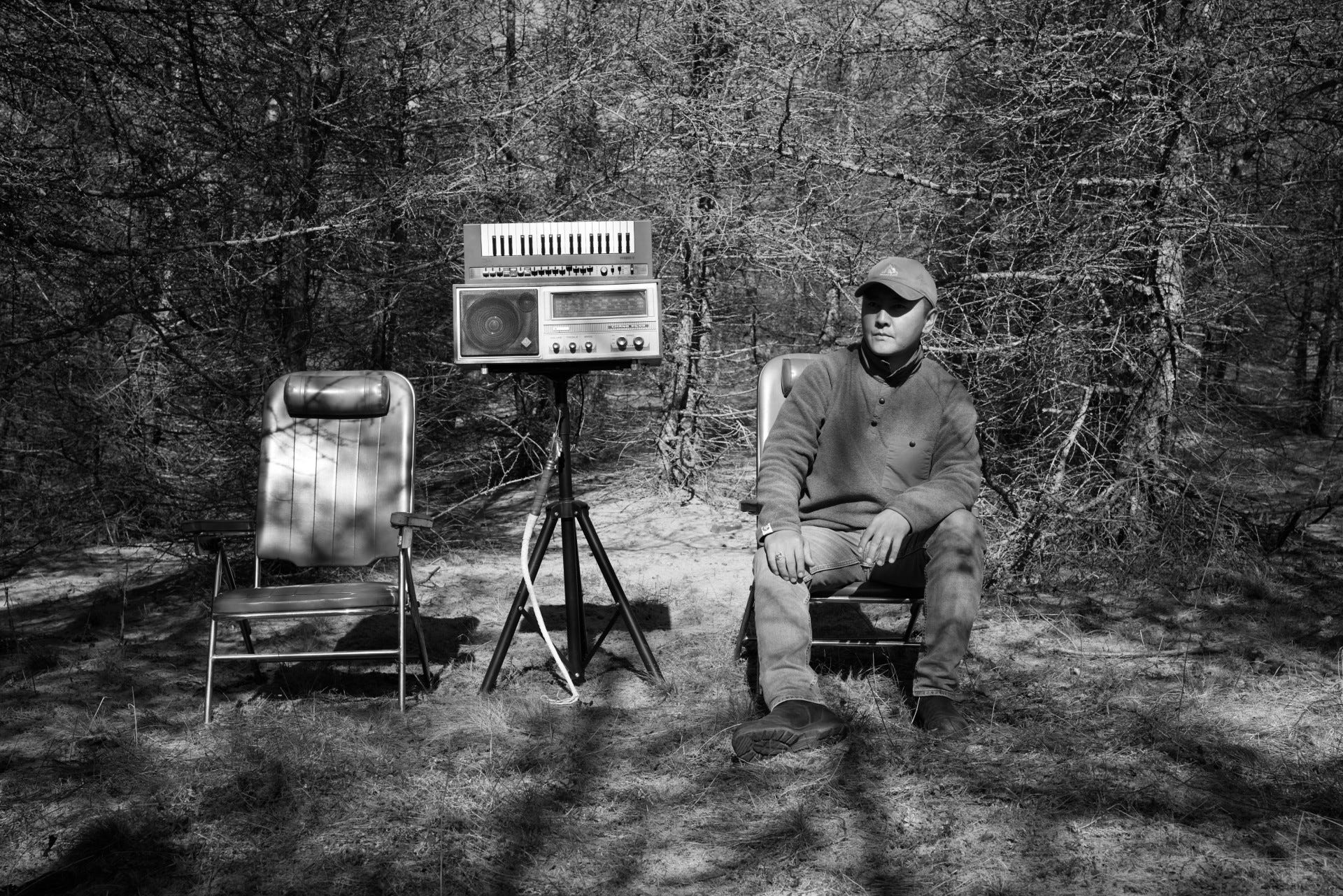
Nevertheless, Bayandalai expresses concern that “urbanisation is happening too fast” and observes that “many cities look the same, like some endless copy-and-paste job”. One antidote to this is his Live Anywhere video series that sees him perform in stunning outdoor locations, from Inner Mongolian grasslands amid roaming animals to dramatic backdrops such as the Great Red Mountain near Ulaanqab.
There’s no particular criteria for choosing the locations, he says, though they are “usually in nomadic areas”. Their key characteristic is that they are “places where nature makes me happy”, he explains.
Not that such performances are without their challenges. A recent video filmed on Minya Konka Mountain in Sichuan, some 4,700 metres above sea level, was posted with a wry comment on WeChat noting how difficult it is to sing that high up. He also admits that it’s not exactly convenient to move equipment around in such locations. But these performances aren’t just a gimmick. “High altitudes can calm you down, allowing you to focus more on your breathing rhythm: things that are easy on the plains become slower,” he says. “Performing impromptu at high altitudes makes me more aware of the limitations nature presents to me. Being able to express myself well within these limitations is the best approach.”
So where would he go with the series if budget wasn’t a consideration? “I’ve always thought of performing in Antarctica,” he muses, “because it’s very cold… which is also a limitation.”
For now, he’s set to tour Europe this summer off the back of Wind of Oirat’s release. He’ll play Night Defined’s home city of Salzburg in late August and is currently seeking gigs in Spain and Portugal — the next steps on a journey that has been far from conventional.
Wind of Oirat is out now.
If you’re able to support with shows for Bayandalai in Europe this summer, please get in touch — either via the artist’s social channels or by replying to this email so I can connect you.

